Decide before installing
Define content types, owners and URL paths. Choose plugins for documented needs rather than accumulating features. Test a theme with real long headings, images and tables on mobile. Plan a separate preview environment and a backup you know how to restore.
Limit access and dependencies
Use individual accounts with appropriate roles. Maintain core, themes and plugins through a checked process. Remove unused components under a backup plan. A plugin labelled SEO does not secure the website or replace correct HTTP behaviour.
Accept each change through actual journeys
Test homepage, article, search, pagination and missing-page behaviour. Check old addresses after changing permalinks. Inspect forms and collected information. After an update, compare rendering and errors: successful installation does not establish successful user journeys.
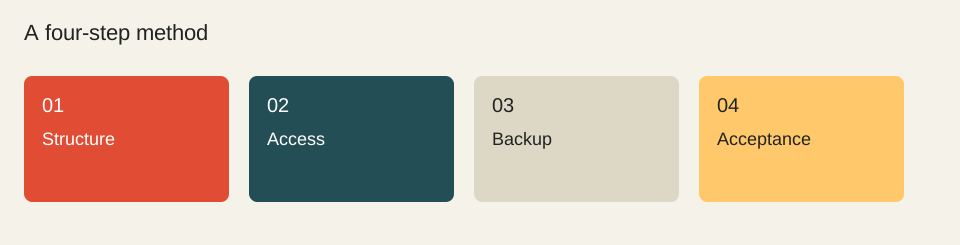
- Structure
- Access
- Backup
- Acceptance
Worked example
Before replacing /year/month/article/, export URLs and map their destinations. Test an old link, a recent article and a search without results before publishing the change.
Check before moving on
These checkboxes are not saved.
Sources & method
Sources reviewed on 1 October 2026. Worked calculations use explicitly hypothetical inputs.
Topic provenance: Le premier livre français sur WordPress bientôt disponible (2009-01). Search Engine Feng Shui. This record does not confirm an individual byline.
This guide is newly written in 2026. It does not reproduce the earlier text and is not attributed to its historical author.