Find the constraint that changes the decision
Ask what makes the usual solution unsuitable: limited connectivity, team size, existing equipment, language or deadlines. Different phrasing without a different need may not justify another page. Document the evidence available for the specialised use case.
Show limits as clearly as benefits
Explain incompatibilities, prerequisites and alternatives. Provide a verifiable example. Avoid identical town pages when the service has no genuine local distinction. An estimated audience is not an assured market.
Connect specialised and general guidance
Link the use case from the general guide and return to selection criteria. A comparison helps readers determine whether the specialised case applies to them. Revise the page when constraints change rather than creating a new URL every year.
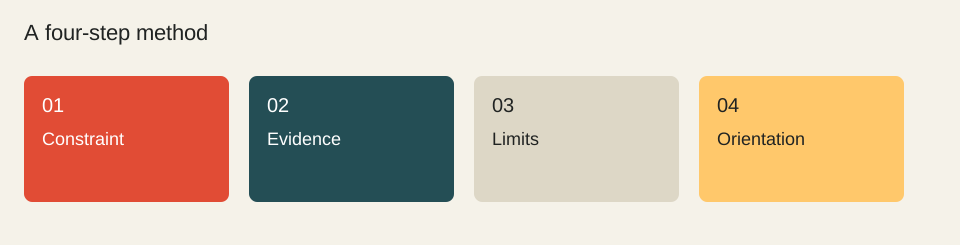
- Constraint
- Evidence
- Limits
- Orientation
Worked example
A video-meeting guide for unreliable connections can address bandwidth, audio quality, asynchronous sharing and fallback options. A generic business-meeting page without those constraints serves a different task.
Check before moving on
These checkboxes are not saved.
Sources & method
Sources reviewed on 1 October 2026. Worked calculations use explicitly hypothetical inputs.
Topic provenance: SEM : Adapter ses offres aux moteurs pour toucher des niches (2009-08). Search Engine Feng Shui. This record does not confirm an individual byline.
This guide is newly written in 2026. It does not reproduce the earlier text and is not attributed to its historical author.