Define scope
Specify hostname, languages, page types and priority journeys. Record inaccessible areas and measurements not performed. Conclusions should match actual coverage rather than an exhaustiveness promise unsupported by collection. Include the source and date of each inventory.
Classify evidence
Separate observed errors, hypotheses and general practices. For a broken page, provide URL, status and test. For suspected content weakness, explain the reader question and missing answer. An automated score alone does not explain a problem.
Prioritise repairs
Compare probable effect, affected volume, risk and effort. Important-page access and functioning journeys normally deserve attention before cosmetic metadata changes. Assign owner, deadline and dependencies so recommendations become executable work.
Accept the changes
Define how to verify a repair and retain the result. Sending a recommendation to another team does not complete it. Repeat the original check after publication and record limits on verification rather than silently closing the issue.
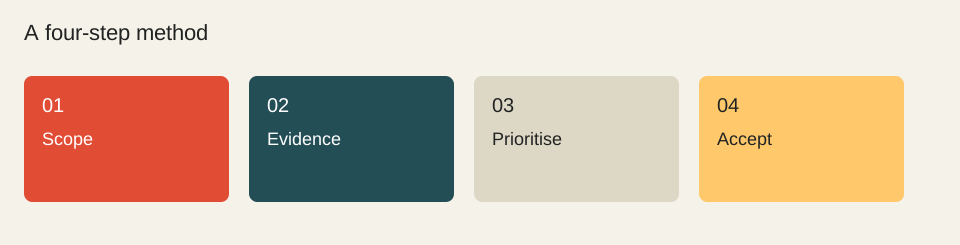
- Scope
- Evidence
- Prioritise
- Accept
Worked example
Audit ticket: URL / evidence / affected need / hypothesis / action / owner / effort / acceptance. Example: correct an internal link to a 404 by pointing to its equivalent, then test the click and final response.
Check before moving on
These checkboxes are not saved.
Sources & method
Sources reviewed on 1 October 2026. Worked calculations use explicitly hypothetical inputs.
Topic provenance: Quand faire un audit SEO ? (consulted capture: 2023-11-30). Search Engine Feng Shui. This record does not confirm an individual byline.
This guide is newly written in 2026. It does not reproduce the earlier text and is not attributed to its historical author.