Map individual destinations
Give every old URL an equivalent destination or an explained removal. Use CMS records, internal links and available server logs. Sending every old page to the homepage removes the answer the visitor expected. Record unresolved addresses rather than guessing a destination.
Check staging thoroughly
Test content, media, forms and indexing instructions. Staging restrictions must be removed from the public site at the correct moment. Compare canonicals and language alternatives against the intended public hostname rather than the test server.
Make the switch reversible
Save the files and routing configuration. Agree stopping conditions such as server errors, a broken purchase journey or missing important content. Someone should be able to initiate rollback using a written procedure instead of assembling one during an incident.
Review exceptions after launch
Run the URL inventory again. Investigate redirect chains, broken links and missing content. Compare trends over comparable periods; an unusual day does not establish that migration caused a traffic change.
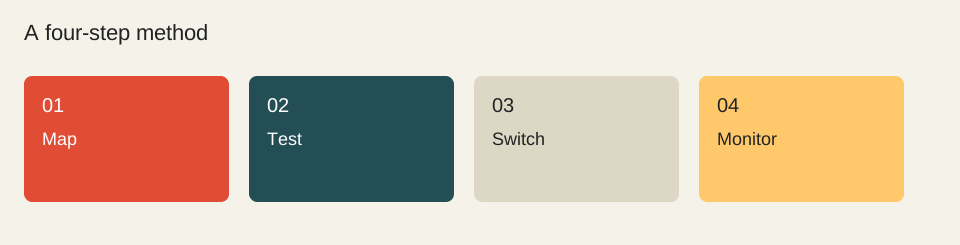
- Map
- Test
- Switch
- Monitor
Worked example
Acceptance table: old URL / destination / expected status / canonical / functional check / owner. A relocated article should use one permanent redirect to its equivalent, followed by a 200 response.
Check before moving on
These checkboxes are not saved.
Sources & method
Sources reviewed on 1 October 2026. Worked calculations use explicitly hypothetical inputs.
Topic provenance: 5 points cruciaux pour une migration réussie (2008-03-14). Search Engine Feng Shui. Byline retained in the publication feed: François Houste.
This guide is newly written in 2026. It does not reproduce the earlier text and is not attributed to its historical author.