Define a useful outcome
Choose a business decision: qualified enquiries, appropriate bookings, successful service use or fewer mistakes. A publisher and a software service do not need identical indicators. Document what someone must understand before acting and which information is currently missing.
Sequence the dependencies
A page must be accessible before a title change can help it. A new category needs navigation before twenty articles are added. Record each defect, its expected effect, an owner and an acceptance check. Priorities should be based on observations rather than invented scores described as ranking factors.
Make change interpretable
Keep publication, deployment and campaign dates. Compare periods that account for seasonality and changes of scope. A temporal correlation does not automatically attribute an outcome to one correction. Include absent or negative effects, limitations and unresolved questions in your assessment.
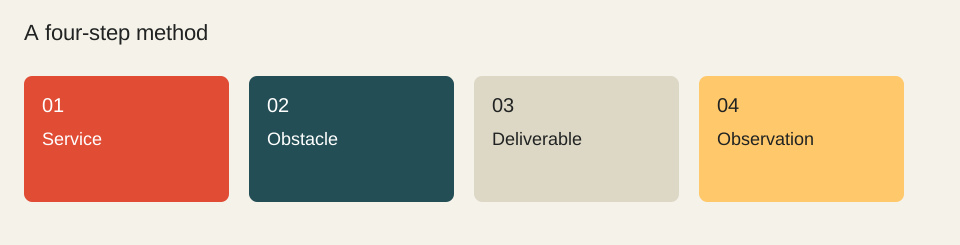
- Service
- Obstacle
- Deliverable
- Observation
Worked example
A manual library can prioritise models generating frequent support requests. The plan connects a complete manual, navigation from the model page and observation of related enquiries. That work remains useful before any traffic increase.
Check before moving on
These checkboxes are not saved.
Sources & method
Sources reviewed on 1 October 2026. Worked calculations use explicitly hypothetical inputs.
Topic provenance: Sans vision stratégique, le référencement naturel n’est plus rien (2009-02). Search Engine Feng Shui. Byline retained in the publication feed: fhouste.
This guide is newly written in 2026. It does not reproduce the earlier text and is not attributed to its historical author.