Design a preparation journey
Separate inspiration, comparison and organisation. Destination pages should help readers choose a season and trip type. Practical pages need access information, conditions, booking and dated restrictions. Seasonal content must remain identifiable when prices or schedules change.
Show the trade-offs
Build itineraries with clearly estimated travel times, alternatives and fallback options. Distinguish calculated distances from observed durations. Identify activities requiring reservations. Do not claim universal accessibility from one feature such as a lift.
Connect useful options transparently
Link appropriate accommodation, transport and activities rather than diverting every question to one partner. Identify commercial relationships. A complete English version must preserve essential conditions, units, place names and official contact routes.
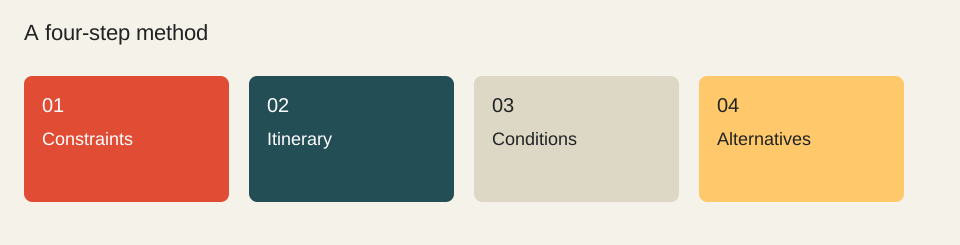
- Constraints
- Itinerary
- Conditions
- Alternatives
Worked example
A car-free weekend plan can cover station arrival, walking to accommodation, Saturday activities and a rainy-day alternative. Check schedules with the operators before publishing.
Check before moving on
These checkboxes are not saved.
Sources & method
Sources reviewed on 1 October 2026. Worked calculations use explicitly hypothetical inputs.
Topic provenance: Le marketing du tourisme, un pense-bête indispensable (2009-08). Search Engine Feng Shui. This record does not confirm an individual byline.
This guide is newly written in 2026. It does not reproduce the earlier text and is not attributed to its historical author.