Identify the provider
Record metric name, definition, date and scope. A domain score and a page score describe different objects. Third-party tools use their own collections; their outputs are not measurements published by Google. Check the actual definition before comparing a number.
Separate history from current measurement
Historical references to public PageRank belong to their period. Do not transfer an old rating to a current product with a different name. A historical screenshot documents an episode rather than establishing the domain’s present condition.
Inspect evidence behind the score
Check content, sources, links and destinations. A highly scored domain can still contain unhelpful or compromised pages. Review an actual sample and distinguish visibility, reputation and information quality instead of assuming they move together.
Use scores as filters
Combine them with relevance, currency, transparency and reader need. Retain reasons for a decision rather than a number alone. An increase does not establish that your actions caused traffic growth, and no threshold guarantees a search position.
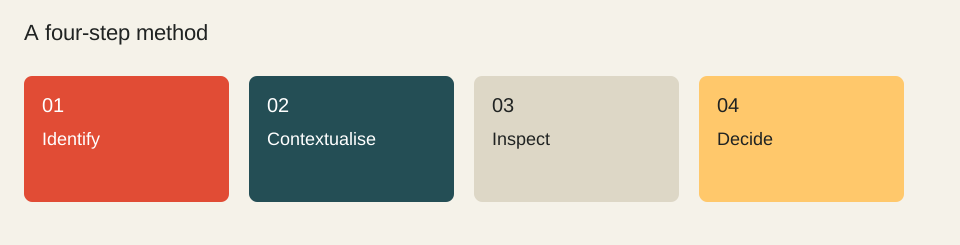
- Identify
- Contextualise
- Inspect
- Decide
Worked example
Comparison sheet: metric / provider / object / date / limitation / independent evidence. Two equally scored domains can have different audiences and content: inspect their pages before deciding.
Check before moving on
These checkboxes are not saved.
Sources & method
Sources reviewed on 1 October 2026. Worked calculations use explicitly hypothetical inputs.
Topic provenance: CNN, premier site média à atteindre un PageRank de 10 (2008-12). Search Engine Feng Shui. This record does not confirm an individual byline.
This guide is newly written in 2026. It does not reproduce the earlier text and is not attributed to its historical author.