Separate narrative from evidence
Date a ranking story and connect it to sources. One screenshot does not represent every country or user. If the position is no longer observable, explain the historical mechanism without claiming that it still works today.
Identify the actors
Separate a host’s intent, participants’ actions and the search engine’s response. Link counts alone cannot explain a ranking. Other signals and system changes may contribute; keep hypotheses distinct from confirmed observations.
Consider reputational costs
A provocative query can attract people without answering their needs. Examine complaints, support questions and brand consequences before calling the activity successful. A traffic spike does not by itself create a trustworthy relationship.
Build a useful alternative
Prefer a resource worth citing: an explained method, documented data or an accessible tool. Measure actual use and correct mistakes. Link manipulation conflicts with current search spam policies; a historical episode is not an operational recommendation.
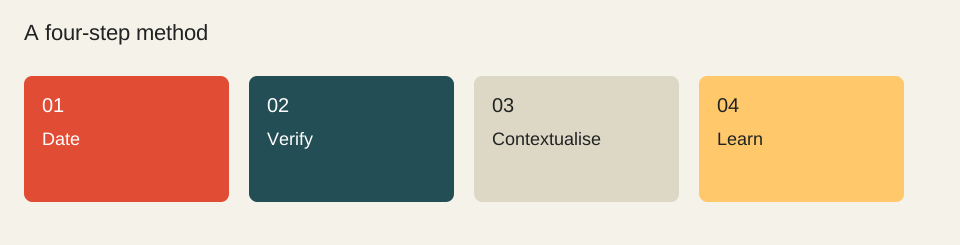
- Date
- Verify
- Contextualise
- Learn
Worked example
Historical case sheet: date / query / context / source / confirmed observation / limitation / present-day lesson. Keep an old episode separate from instructions for a current campaign.
Check before moving on
These checkboxes are not saved.
Sources & method
Sources reviewed on 1 October 2026. Worked calculations use explicitly hypothetical inputs.
Topic provenance: Stephen Colbert : The Greatest Living American ? (2007-04-19). Search Engine Feng Shui. Byline retained in the publication feed: François Houste.
This guide is newly written in 2026. It does not reproduce the earlier text and is not attributed to its historical author.