Map buying decisions
People compare budgets, compatibility, delivery and returns as well as products. Collect questions from support and sales. Assign each need to a page that can answer it accurately rather than producing overlapping keyword lists.
Maintain useful destinations
A recurring page can keep its URL when maintained. Update year-specific information and handle unavailable products without hiding relevant alternatives. A dated archive should remain clearly historical rather than looking like a current offer.
Test the final steps
Check filters, variants, fees and conditions before purchase. Delivery cutoffs must come from operations rather than a marketing formula. Explain uncertainties when timing depends on destination or carrier, and make returns understandable before checkout.
Learn after the season
Compare orders, contribution, returns and support questions, not only visits. Identify pages that resolved hesitation and those that created incorrect expectations. Keep a revision calendar for the next season.
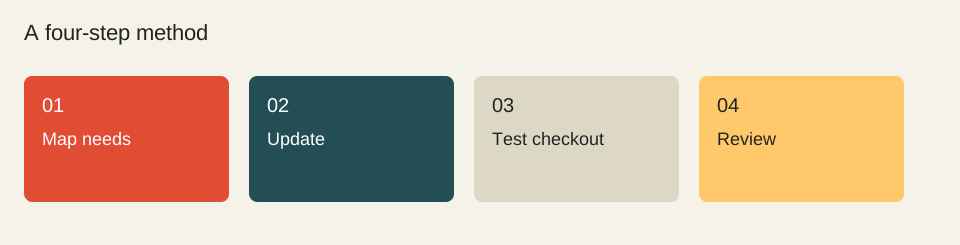
- Map needs
- Update
- Test checkout
- Review
Worked example
Illustrative schedule: eight weeks beforehand, validate needs and assortment; four weeks beforehand, test pages; during the season, monitor stock and delivery; afterwards, record returns and questions.
Check before moving on
These checkboxes are not saved.
Sources & method
Sources reviewed on 1 October 2026. Worked calculations use explicitly hypothetical inputs.
Topic provenance: Noël : Le eCommerce à l’épreuve de la crise (2008-12). Search Engine Feng Shui. This record does not confirm an individual byline.
This guide is newly written in 2026. It does not reproduce the earlier text and is not attributed to its historical author.