Describe the observed presentation
Record date, language, territory, device and wording. Identify what is actually present: links, ads, images, videos, local results or generative responses when you observe them. Do not invent an attention map. Two numerical positions can represent different visual presentations. A single screenshot documents one observation, not every version of an interface.
Compare clicks and impressions within one scope
A click-through rate needs defined units and filters. Fictional example: fifteen clicks divided by one hundred and fifty impressions is 10%. Comparisons require equivalent dates, queries, contexts and provider definitions. Small samples can fluctuate substantially. Do not combine analytics visits with search impressions without explaining different measurements.
Improve the answer before observing outcomes
Check that the title accurately describes the page, the content resolves the constraint and the next step makes sense. A sensational title that earns a click but disappoints the reader does not demonstrate usefulness. Record changes and dates for later observation. A rate difference after a change may also reflect different queries, seasons or result presentations.
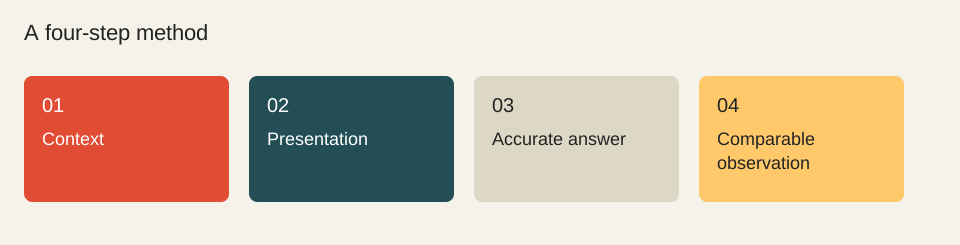
- Context
- Presentation
- Accurate answer
- Comparable observation
Worked example
For “permanent POST redirect”, a title should identify the technical question and the page should explain what needs checking before choosing a response. Adding “guaranteed best SEO” supplies neither that information nor evidence of an outcome.
Check before moving on
These checkboxes are not saved.
Sources & method
Sources reviewed on 1 October 2026. Worked calculations use explicitly hypothetical inputs.
Topic provenance: Big.com, le plus “gros” moteur de recherche du Web (2007-10-25). Search Engine Feng Shui. Byline retained in the consulted version: Thomas Poulard.
This guide is newly written in 2026. It does not reproduce the earlier text and is not attributed to its historical author.