Define three sustainable formats
Choose an audience and recurring question, then three formats: explanation, demonstration and response. Set exclusions such as private data, unverified rumours and results without a method. Assign each format an owner and an information source.
Separate conversation and documentation
A short response can link to permanent guidance. Update the reference guide when a question exposes a gap, then share the correction. Check context before publishing quotes or screenshots. A popular reaction does not establish that all readers understood the answer.
Keep a publication record
Record topic, format, source, approval and date. Compare outcomes against objectives and context without treating reactions as sales. Plan error handling through a visible correction, reference link and retained decision. Automation should not invent a response from a real person.
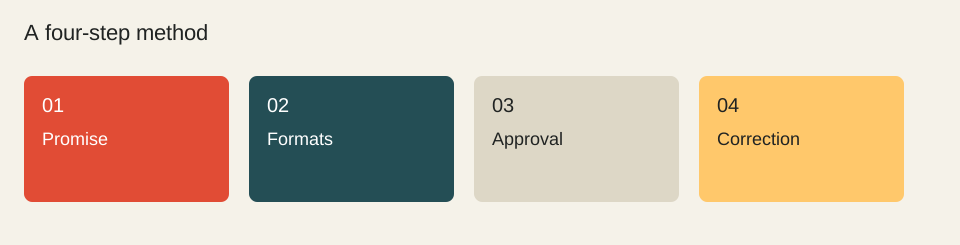
- Promise
- Formats
- Approval
- Correction
Worked example
A weekly series can explain a migration error, show an HTTP check and provide a reusable inspection step. Readers can then anticipate what kind of information the account will offer.
Check before moving on
These checkboxes are not saved.
Sources & method
Sources reviewed on 1 October 2026. Worked calculations use explicitly hypothetical inputs.
Topic provenance: Twitter : de l’importance de la ligne editoriale (2009-09). Search Engine Feng Shui. Byline retained in the publication feed: fhouste.
This guide is newly written in 2026. It does not reproduce the earlier text and is not attributed to its historical author.