Define through an example
Give each term a short definition, an example and a distinction from a nearby concept. Crawling is not indexing, and indexing is not a guaranteed ranking. Keep technical acronyms while explaining their role in the reader’s language.
Connect terms with tasks
Definitions should lead to relevant procedures. Canonical can link to a redirect decision guide; CLS can lead to stability checks. Someone wanting a quick explanation should not have to read a lengthy sales argument.
Keep the collection navigable
A local filter, alphabetical sections and stable definition links often suffice. Do not index every filter combination. Update terms linked to discontinued products and retain historical context where old manuals still mention them.
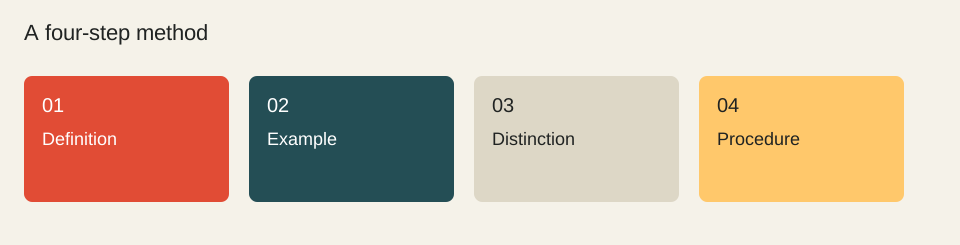
- Definition
- Example
- Distinction
- Procedure
Worked example
“301 redirect: an HTTP response indicating a permanent move. An old manual can redirect to its current equivalent. Unlike a canonical hint, it moves the visitor to another address.” The definition supports an immediate decision.
Check before moving on
These checkboxes are not saved.
Sources & method
Sources reviewed on 1 October 2026. Worked calculations use explicitly hypothetical inputs.
Topic provenance: SEO : 5 bonnes raisons de proposer un lexique sur son site (2009-01). Search Engine Feng Shui. This record does not confirm an individual byline.
This guide is newly written in 2026. It does not reproduce the earlier text and is not attributed to its historical author.