Diagnose first
Collect needs, offer details, journeys and available observations. Separate facts from assumptions. Falling sales may reflect unavailable stock or a broken form; adding visitors does not automatically resolve the cause. Check operational conditions alongside marketing reports.
Choose a bounded action
Specify audience, message, destination and authorised budget. Define a hypothesis the action can actually examine. Changing the entire journey at once makes it harder to determine which change helped or harmed the outcome.
Prepare measurement
Choose a commercial outcome, intermediate indicators and stopping conditions. Verify collection and definitions before launching. Explain coverage limitations when consent means some visits are not measured instead of implying that reports are exhaustive.
Decide after observation
Compare findings with the hypothesis and note incidents and external influences. Recommend continuation, revision or stopping. A negative test can prevent waste; preserve it in a log available to future teams rather than quietly losing the lesson.
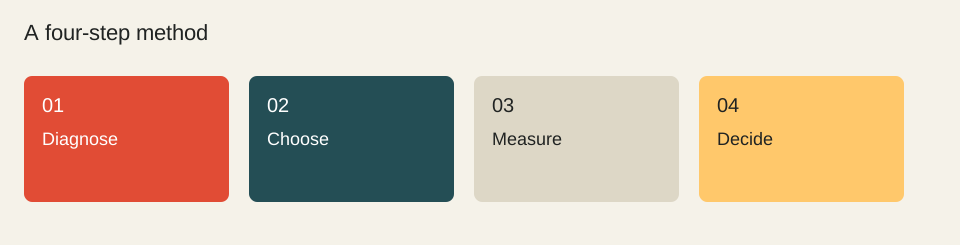
- Diagnose
- Choose
- Measure
- Decide
Worked example
Action sheet: need / hypothesis / channel / destination / budget / period / outcome / decision. Example: clarify an offer and observe qualified enquiries without promising a predetermined increase.
Check before moving on
These checkboxes are not saved.
Sources & method
Sources reviewed on 1 October 2026. Worked calculations use explicitly hypothetical inputs.
Topic provenance: Quelles sont les 3 étapes principales du webmarketing ? - search-engine-feng-shui.com (consulted capture: 2020-10-19). Search Engine Feng Shui. This record does not confirm an individual byline.
This guide is newly written in 2026. It does not reproduce the earlier text and is not attributed to its historical author.