Connect needs and statements
Identify what someone must know to choose and use the product. Separate factual details, persuasion and applicable obligations. Requirements vary by product and country; have regulatory statements reviewed by the responsible function rather than assuming a generic template applies.
Establish reading order
Give name, variant and important details a clear hierarchy. Test packaging at actual size and images on phones. A large design presentation can conceal problems that appear on a shelf or catalogue thumbnail.
Align variants
Maintain mappings between references, photographs, quantities and descriptions. An old visual can remain online after a product changes. Assign responsibility and review dates to both listings and print files so one does not silently outlast the other.
Verify claims
Retain evidence for each specific benefit. Do not present certification, origin or performance without documentation valid for the reference concerned. Attractive language does not build trust when the actual product contradicts it.
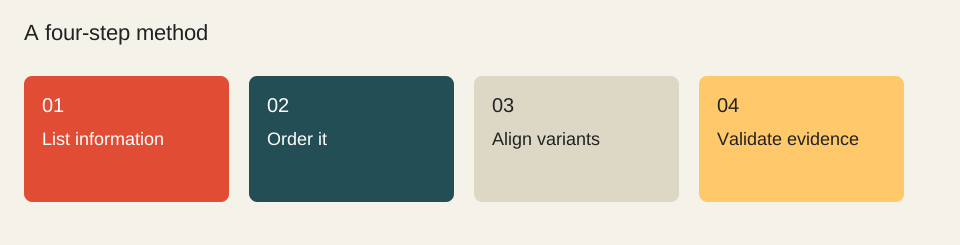
- List information
- Order it
- Align variants
- Validate evidence
Worked example
Consistency table: reference / variant / quantity / image / description / evidence / print version. Acceptance: a person should identify the same variant on the pack and webpage without verbal coaching.
Check before moving on
These checkboxes are not saved.
Sources & method
Sources reviewed on 1 October 2026. Worked calculations use explicitly hypothetical inputs.
Topic provenance: Comment mettre en valeur ses produits pour bien vendre ? (consulted capture: 2023-09-30). Search Engine Feng Shui. This record does not confirm an individual byline.
This guide is newly written in 2026. It does not reproduce the earlier text and is not attributed to its historical author.