Assemble the factual record
State what changes, for whom, when and on what evidence. Attribute quotes only to people who actually approved them. Distinguish estimates, targets and observed results. Compared figures need compatible periods and units.
Publish a reference version
Provide a readable page containing the release, date and professional contact. Add media with rights and credits. A PDF can supplement HTML. When correcting a release, explain the change rather than silently erasing a claim already distributed.
Choose relevant distribution
Approach publications with a genuine interest in the news. Disclose paid placements. Do not create dozens of near-identical releases just to multiply links. Editorial coverage should not depend on imposing an optimised anchor.
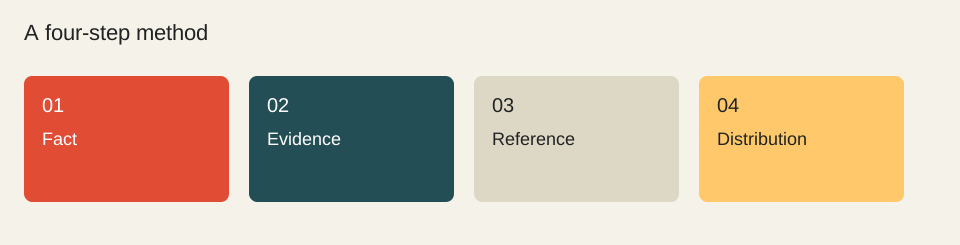
- Fact
- Evidence
- Reference
- Distribution
Worked example
A service launch can identify available territory, access conditions, date and test method. “Revolutionary leader” without measurement or definition is not a verifiable fact.
Check before moving on
These checkboxes are not saved.
Sources & method
Sources reviewed on 1 October 2026. Worked calculations use explicitly hypothetical inputs.
Topic provenance: Quelques plateformes pour diffuser ses communiqués de presse (2009-08). Search Engine Feng Shui. Byline retained in the publication feed: fhouste.
This guide is newly written in 2026. It does not reproduce the earlier text and is not attributed to its historical author.
Build a press brief around one checkable fact
A useful press pack lets a journalist verify the central claim without joining a mailing list or repeating promotional language. This exercise uses an invented community archive; its dates, people and result are not real announcements.
- Write the news claim and the exact evidence that supports it. Separate a completed fact from a plan, an opinion and an estimate. Keep the evidence accessible and identify its version.
- Create a brief with what changed, who is responsible, when it happened, who may use it and a contact route. Supply image rights and a descriptive caption separately; a downloadable picture is not automatically licensed.
- Draft a short announcement without a fabricated quotation. If no authorised spokesperson has supplied words, omit the quote. Link the reference page and name the limitation beside the headline claim.
- Choose relevant recipients and disclose sponsorship where applicable. Paid distribution is not independent editorial coverage. Do not use a press release or paid links as a promise of ranking improvement.
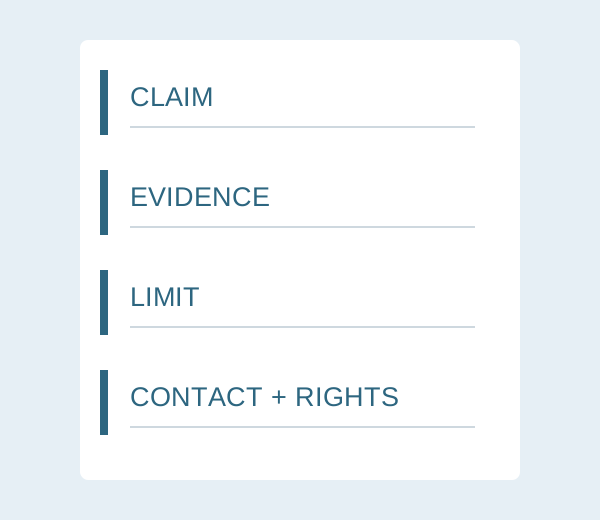
| Field | Example or check |
|---|---|
| Fictional fact | Example Archive publishes an index of 12 permitted oral-history recordings. This is an invented number, not a claim about a real archive. |
| Evidence field | A versioned list with 12 entries, recording rights and working access links. Without that list the headline stays a draft. |
| Draft lead | “Example Archive has published a searchable index of twelve recordings. The index identifies the date, topic and access conditions of each entry.” |
| Limit and contact | The index excludes restricted recordings. |
| Press-pack checklist | Claim __; document/version __; limitation __; authorised contact __; image rights/caption __; sponsorship __; correction route __. |
Keep the factual reference page useful even if no media outlet covers it. The example is a new exercise and is not attributed to François Houste.