Start with editorial purposes
Define subjects that deserve ongoing coverage and the people they serve. Breaking news, investigations and enduring explanations have different useful lifetimes. Do not assess every format against the same immediate visit target.
Break down arrivals
Distinguish search, direct, newsletters, social and partners using the reporting tool’s definitions. Consent choices can limit coverage. An attributed channel does not reveal every step that brought the reader to a publication.
Evaluate the answer delivered
Review reader questions, necessary corrections and whether the article explains the evidence. Time spent alone does not establish satisfaction: it can indicate careful reading or difficulty locating the answer. Combine behavioural observations with editorial review.
Build durable connections
Connect news to explanatory dossiers and sources. Offer an understandable subscription without requiring it. Assess repeat journeys over an adequate period, keeping historical figures as context rather than current forecasts.
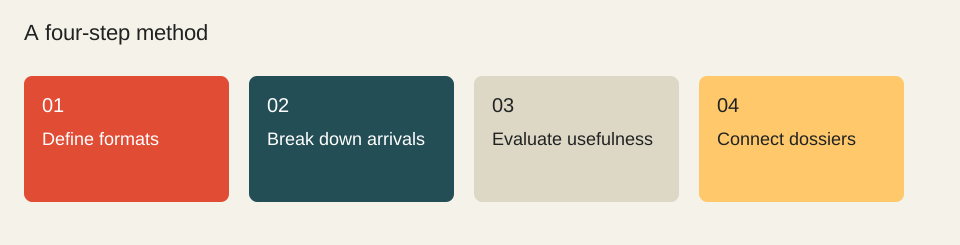
- Define formats
- Break down arrivals
- Evaluate usefulness
- Connect dossiers
Worked example
Editorial sheet: subject / format / useful lifetime / observed channel / useful action / update requirement. An investigation also depends on evidence and editorial impact, not merely a spike in clicks.
Check before moving on
These checkboxes are not saved.
Sources & method
Sources reviewed on 1 October 2026. Worked calculations use explicitly hypothetical inputs.
Topic provenance: 25% de l’audience des journaux en ligne viendrait de la recherche (2007-05-04). Search Engine Feng Shui. Byline retained in the publication feed: François Houste.
This guide is newly written in 2026. It does not reproduce the earlier text and is not attributed to its historical author.