Record the parameters
Save country, period, category, search type and the choice between topic and term. Screenshots with different parameters do not form a reliable comparison. Put filters in the caption so another reader can reproduce the analysis.
Compare compatible series
Place terms in one comparison where appropriate. Separately normalised graphs can each reach a maximum without representing comparable demand. Keep language variants that affect the question and distinguish vocabulary changes from changes in underlying interest.
Look for external context
Check events, seasons and terminology changes. A spike may reflect controversy or passing curiosity rather than buying intent. Compare commercial observations where available, without turning correlation into a demonstrated cause.
Choose a measurable action
Use the pattern to plan research, schedule a revision or design an editorial test. Record the hypothesis, period and expected outcome. Explain weak or unstable signals rather than filling gaps with invented observations.
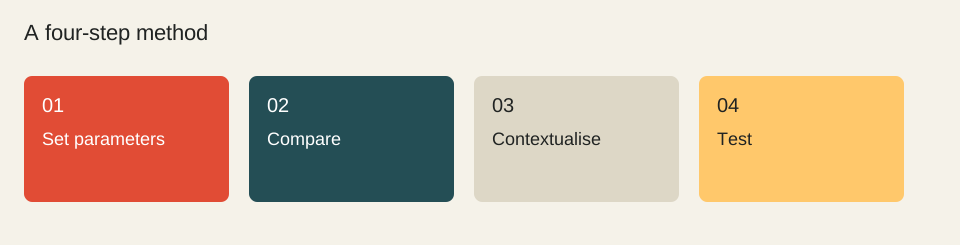
- Set parameters
- Compare
- Contextualise
- Test
Worked example
Analysis log: question / parameters / compared terms / observed spike / explanation to verify / proposed action. You can prepare a seasonal page before a habitual peak without promising the peak will recur.
Check before moving on
These checkboxes are not saved.
Sources & method
Sources reviewed on 1 October 2026. Worked calculations use explicitly hypothetical inputs.
Topic provenance: (2007-10-03). Search Engine Feng Shui. Byline retained in the publication feed: Bertrand.
This guide is newly written in 2026. It does not reproduce the earlier text and is not attributed to its historical author.