Define priority tasks
Choose three key actions, such as understanding an offer, checking information or contacting a team. Describe what someone needs before acting. A page should serve a task; appearing in a menu does not establish its usefulness.
Prepare the content
Inventory copy, images, evidence and documents. Assign an owner and deadline to each missing item. Do not fill a mock-up with invented testimonials or publish private records by default. Resolve factual gaps before treating design as complete.
Clarify ownership
Identify owners of the domain, hosting, code, media and accounts. Plan access, backup and export. A handover that depends on an inaccessible personal account creates an operational risk even when the page looks polished.
Write acceptance checks
List journeys to test on mobile and with a keyboard, important links and post-launch responsibilities. Include forms, errors and update conditions. The brief then becomes a shared validation tool rather than a page-count quotation.
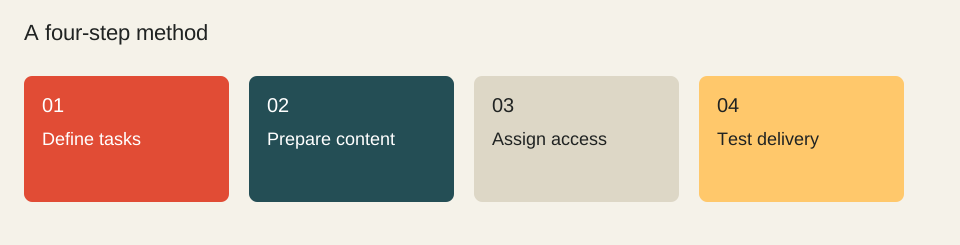
- Define tasks
- Prepare content
- Assign access
- Test delivery
Worked example
Brief table: task / required content / evidence / owner / deadline / acceptance test. For contact: a confirmed public number, realistic response hours and a form tested for both failure and success.
Check before moving on
These checkboxes are not saved.
Sources & method
Sources reviewed on 1 October 2026. Worked calculations use explicitly hypothetical inputs.
Topic provenance: Que savoir avant de créer un site Internet ? (consulted capture: 2024-04-24). Search Engine Feng Shui. This record does not confirm an individual byline.
This guide is newly written in 2026. It does not reproduce the earlier text and is not attributed to its historical author.