Describe the original object
Record title, known creator, date, language and collection identifier. Distinguish the document’s date from digitisation. Uncertain attribution should remain uncertain; inventing a creator undermines trust and makes later reuse harder.
Prepare searchable text
OCR supports discovery but can alter names, numbers and punctuation. State its status and check a sample. For important documents, provide the source image and a corrected transcription where rights permit. Keep corrections traceable to the underlying object.
Explain rights separately
Distinguish rights covering the document, reproduction and editorial additions. Online availability does not imply republication permission. Provide a correction route and a way to ask about reuse rather than relying on an unexplained download button.
Connect related objects
Link editions, authors, subjects and collections. Preserve stable addresses and a comprehensible reading order. Thousands of nearly empty records offer less value than a smaller collection with meaningful, verifiable descriptions.
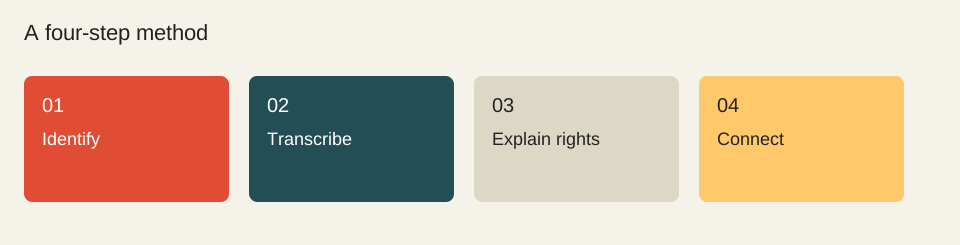
- Identify
- Transcribe
- Explain rights
- Connect
Worked example
Record template: title / creator / original date / language / identifier / source institution / rights / OCR status / permanent URL. Mark an unconfirmed field as undetermined rather than guessing.
Check before moving on
These checkboxes are not saved.
Sources & method
Sources reviewed on 1 October 2026. Worked calculations use explicitly hypothetical inputs.
Topic provenance: Google et la BNF, vers la fin de l’hypocrisie ? (2009-08). Search Engine Feng Shui. This record does not confirm an individual byline.
This guide is newly written in 2026. It does not reproduce the earlier text and is not attributed to its historical author.